Narrative Practice: An Easy-to-Read Introduction for Healing, Community Work, and Holistic Health
People understand their experiences through stories. The stories you tell about your illness, your body, and your future shape everything from how you eat to whether you pursue healing at all. Narrative practice offers a structured, respectful way to examine those stories and, when needed, rewrite them. This guide breaks down what narrative practice is, how it works in therapy rooms, communities, and holistic health settings, and how it connects with the healing philosophy behind Books by Dr. Johnny Delirious.
Key Takeaways
- Narrative practice assumes people have many stories occurring simultaneously, not one fixed identity, and that problems are separate from people. It is a non blaming approach that centres people as the main character in their own lives.
- Practical applications include individual narrative therapy, community work, outsider witness practices, and externalizing conversations, all of which assist people in moving from dominant problem saturated stories to preferred stories.
- Narrative therapy is effective for addressing depression and anxiety, eating disorders, chronic illness, trauma, and grief. It enhances resilience by viewing problems objectively.
- Narrative practice complements holistic healing protocols like food-based therapies, HTMA (Hair Tissue Mineral Analysis), and Ancient Greek healing methods by addressing the identity and meaning dimensions of illness.
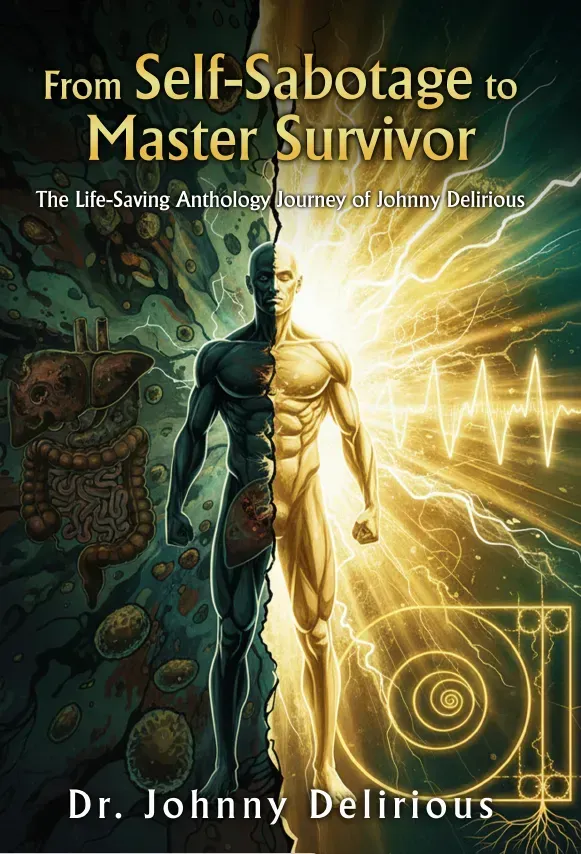
- Readers can continue learning through a free course-style starter guide and Dr. Johnny Delirious's forthcoming anthology From Self-Sabotage to Master Survivor, releasing December 2025.
What Is Narrative Practice? (Easy-to-Read Introduction)
Narrative practice is the broader field that includes narrative therapy, community work, narrative coaching, and organizational applications. It grew from the pioneering work of narrative therapy founders Michael White and David Epston in the 1980s in south australia and New Zealand, then expanded internationally through the 1990s and 2000s. Their seminal book Narrative Means to Therapeutic Ends (1990) formalized many core ideas, and later works like Maps of Narrative Practice (2007) provided detailed conversational guides.
The core idea is straightforward: narrative practice assumes people are not their problems. Instead, people live in many stories, and some dominant stories can be reauthored into more helpful alternative stories. Narrative practice is grounded in social justice and poststructural ideas drawn from thinkers like Michel Foucault and Jerome Bruner. It questions cultural narratives about illness, mental health, gender, race, and power relations.
At Books by Dr. Johnny Delirious, we connect narrative practice with holistic health, chronic illness recovery, and Ancient Greek healing traditions. Narrative practice promotes healing through storytelling, and that aligns directly with our mission of helping people move from self-sabotage to mastery.

Stories, Health, and Illness: How Narratives Shape Our Lives
Stories influence how people see health, illness, and healing today, whether through social media, medical appointments, family conversations, or self-help communities. People experiences constantly shape and reshape the narrative they carry about their bodies and their futures.
Dominant stories around chronic illness often sound like: "I'm broken," "I'll never recover," or "my genetics are my destiny." A 2020 study of 120 women with endometriosis found that when illness narratives were high in centrality to identity, meaning the illness was seen as defining who they are, participants reported more pain and lower life satisfaction. Stories can limit or empower individuals, and the dominant plot of "I am my diagnosis" consistently limits.
But alternative stories and new stories can emerge. Examples include "I am a learner about my body," "I am a master survivor," or "I can work with my body instead of fighting it." Rewriting personal narratives fosters empowerment in individuals, and stories about mental health and eating disorders can either reduce stigma and shame or intensify them, depending on how they are told.
Consider someone with hepatitis C whose dominant narrative reads: "My liver is failing, nothing can help, genetics made me sick." Through narrative practice, they externalize "The Viral Shadow" as a separate entity and begin noticing certain events where energy was higher, digestion improved, or lab markers shifted when certain foods and minerals were introduced. From those moments, a new narrative emerges: "I am a master survivor learning to support my liver with food, nutrients, rest, and community." That shift, grounded in making sense of real experiences, increases motivation to follow holistic protocols and engage in self-care.
Core Principles of Narrative Therapy Within Narrative Practice
Narrative practice is the wide field. Narrative therapy is one specific therapeutic application done by a trained narrative therapist. While related, they are not identical. This distinction matters because narrative therapy involves interactive conversations with clients in structured therapeutic settings, whereas narrative practice can extend to any context where stories are examined, challenged, and reshaped.
Narrative therapy:
- Centres people as experts in their own lives and assumes people have many skills, values, and competencies
- Separates the person from the problem, treating the problem as the problem, not the person
- Treats meaning as contextual and negotiable rather than fixed
- Uses curiosity as a key principle, asking questions rather than delivering judgments
The therapist acts as a collaborator in narrative therapy. Therapists adopt a collaborative posture in sessions, using respectful, non-blaming therapeutic conversations rather than giving top-down advice. They employ active listening and questioning techniques. Narrative therapy confronts societal narratives related to race and gender, and therapists use narrative therapy to analyze cultural and social factors affecting a person's life.
Narrative therapy is widely used for trauma, grief, eating disorders, domestic violence recovery, and family conflict. Narrative family therapy applies these principles to family members navigating conflict. Increased self-differentiation is a recognized benefit, helping people distinguish their own identity from inherited or imposed stories.
In holistic health, narrative therapy complements nutritional changes, HTMA, and detox protocols by addressing the story of illness, fear, and identity. The process helps clarify a person's values and goals, which is essential when someone is deciding whether to commit to a demanding healing protocol.
Living Many Stories at Once
People hold many simultaneous, sometimes conflicting stories about who they are. Narrative practice centers on the idea that people have multiple stories shaping their lives, and these stories are occurring simultaneously. This concept of "multistoried lives" is one of the important principles of the approach.
Concrete examples:
- "I am sick" vs. "I am resilient"
- "I am a binge eater" vs. "I am someone learning to care for my body"
- "I failed treatments before" vs. "I persistently keep searching for answers"
- "I am defined by my diagnosis" vs. "I have many stories beyond this label"
Narrative practice invites people to notice which stories have become dominant and which supportive stories have been ignored or silenced. This is especially powerful for those labeled with chronic illness for decades, such as long-term hepatitis, chronic fatigue, or autoimmune conditions, where the medical narrative may have crowded out every other identity thread for a long time period.

Dominant Stories and Alternative Stories
Dominant stories are problem-saturated narratives that feel like "the truth" because they've been repeated and socially reinforced. They often involve thin descriptions and thin conclusions about a person tells, reducing a rich life to a single storyline. These dominant problem saturated stories lead to more thin conclusions that ignore a person's strengths, history, and complexity.
Health-focused examples of dominant stories:
- "My lab numbers define me"
- "My body always betrays me"
- "I can't trust any doctor"
- "I will always be sick"
An alternative story is a new or rediscovered narrative that highlights values like courage and persistence, includes unique outcomes where the problem had less influence, and opens possibilities for action. Narrative therapy advocates for uncovering alternative stories. Therapists assist in identifying alternative storylines for clients through careful listening, questions, and documenting preferred stories. These preferred realities are not fantasies; they are grounded in real events and values that already exist in the client's life but have been overshadowed by the dominant plot.
Key Narrative Therapy Practices: From Externalizing to Outsider Witness
Several hallmark narrative practices form the toolkit: externalizing conversations, re authoring identity, re-membering, absent-but-implicit, outsider witness practices, and therapeutic documents. Each practice is a conversational style rather than a fixed technique, and they can be adapted for individual therapy, group work, and community projects.
These practices empower people with eating disorders, trauma histories, and chronic illnesses to change their relationship with problems and with medical labels. A skilled therapist uses these conversational maps in a particular sequence tailored to the person consulting them, but the maps can also inform self-help journaling and community storytelling. The therapist plays a guiding role, but the client leads.
Externalizing Conversations: You Are Not the Problem
Externalizing conversations are the practice of separating the person from the problem. Therapists use externalization to help clients view problems as separate. Instead of "You are anxious," the language shifts to "Anxiety is visiting you." Narrative therapy separates people from their problems through this linguistic shift.
Health examples:
- "The Binge" instead of "I am a binge eater"
- "The Fatigue Storm" instead of "I am lazy"
- "The Viral Shadow" instead of "I am hepatitis"
Naming a problem allows individuals to analyze its effects. Externalizing the problem reduces guilt and shame in clients and allows them to describe how the problem behaves, notice times when they push back, and explore what gives the problem strength. Externalizing conversations help clients assess their relationship with problems. Narrative therapy encourages clients to define their problems externally, and mapping the influence of problems aids clients in understanding relationships and goals.
Consider an adolescent in adolescent psychiatric nursing who externalizes "The Critic" or "The Scale Voice." By naming and separating this voice, the young person begins noticing times when The Critic is quieter, perhaps during meals with friends or after rejecting a diet culture message on social media. These moments become building blocks for a more compassionate story. Therapists help clients explore how problems influence their lives, and externalizing techniques help clients view problems as separate issues.

Re-Authoring Identity and Unique Outcomes
Re authoring identity is the process of collaboratively building new identity stories that fit a person's values and lived experiences better than old, restrictive narratives. Re-authoring identity involves co-constructing preferred narratives. Narrative therapy helps clients re author their life stories, and co-authoring narratives involves the client leading the narrative development.
Unique outcomes are exceptions to the problem story, moments when the person acted differently or the problem was weaker, that become building blocks of new stories. Unique outcomes reveal strengths hidden in problem-saturated narratives. A pilot study among youth aged 14-21 with rheumatologic illnesses found that creative writing interventions based on storytelling significantly improved self-reported physical health scores.
For someone with hepatitis C or autoimmune issues, unique outcomes might include times of more energy, deeper connection, or renewed purpose that their dominant story doesn't allow them to remember. Re-authoring can then lead to new commitments: starting a gentle nutrition plan, joining a supportive community, or engaging in Master Survivor-style self-education. Narrative therapy enhances resilience by viewing problems objectively, and the re telling of life stories with these new elements creates space for real change.
Re-membering Practices: Who Gets a Voice in Your Story?
Re-membering is the practice of revisiting the "membership" of people and influences in someone's life story, strengthening helpful relationships and loosening harmful ones. It's not about memory alone, but about choosing who gets a significant part in your narrative.
People might:
- Bring forward supportive figures, like a grandparent who believed in their healing or an ancestor whose resilience provides a model
- Downsize the influence of shaming professionals or critical family members who reinforced problematic stories
This is especially relevant for patients who have felt dismissed by conventional medicine and now choose to include holistic practitioners and peer communities in their new story. Re-membering an ancestor's traditional healing wisdom, for instance, can directly support present-day recovery efforts and provide narrative grounding for food-based or mineral-balancing protocols.
Absent-But-Implicit: Values Hidden Beneath Problems
Every complaint or expression of distress points toward a hidden value or hope. This concept, called "absent but implicit," is one of narrative theory's most useful tools. For example, "I hate how anxious I am" implies a value for calm, safety, or freedom.
Health examples:
- Frustration with bingeing may reveal a desire for self-respect and body kindness
- Anger at a chronic diagnosis may reveal a value for autonomy and purpose
- Exhaustion from failed treatments may reveal a commitment to perseverance
Narrative therapists gently ask about these values, then link them to preferred stories and new actions in daily life. This concept helps people see strengths and commitments even in the middle of pain or failure. The process helps clarify a person's values and goals, grounding the re authoring teaching process in what genuinely matters to the person.
Outsider Witness Practices and Community Conversations
Outsider witness practices involve inviting another person or small group, the outsider witnesses, to listen to someone's preferred story, then respond by sharing what resonated, without judgment or advice. This allows people to hear stories reflected back to them through the eyes of others, creating a richer, more layered understanding.
This is used in:
- Therapy groups for survivors of violence
- Community work with refugees
- Circles for those living with eating disorders or long-term illness
The process follows a simple three-step flow: listening, reflecting what stood out, and the original storyteller responding about what they valued in the reflections. This creates a particular sequence of deepening that amplifies preferred realities. These community-based healing spaces align well with holistic health and social-justice-oriented narrative approaches.

Therapeutic Documents and Letters
Therapeutic documents are letters, certificates, or written summaries co-created by the therapist seeks to honor shifts in identity and action alongside the client. Therapeutic documentation reinforces a client's new narrative in concrete, tangible form.
Examples include:
- "Certificate of Breaking Up with The Binge"
- Letters documenting new stories of surviving chronic hepatitis or autoimmune flares
- Written summaries of values, commitments, and unique outcomes discovered during sessions
In holistic contexts, these documents can also record health milestones: improved HTMA results, stable liver markers, or successful changes in food-based therapies. Writing and reading these documents reinforces new narratives and counters old, problem-saturated medical records that often reduce a rich life to thin descriptions.
Narrative Practice Beyond the Therapy Room: Community Work and Organizational Uses
Narrative practice now extends well beyond the therapy room into schools, NGOs, clinics, workplaces, and activist projects worldwide. Current practices include narrative groups for people impacted by war or displacement, community storytelling about mental health to reduce stigma, and organizational narrative coaching. It promotes social justice by empowering marginalized voices and creates space for local knowledge.
Narrative organizational practices help managers and community leaders shift dominant stories. For example, a team moves from "we are burned out" to "we are learning to protect our energy and values." Projects like "Tree of Life" have been adapted to community gardens, support circles, and online holistic healing forums. The ethical stance is clear: community narrative practice respects local knowledge, listens for many stories, and avoids imposing a single correct direction from one expert script.
Narrative Practice and Eating Disorders
Narrative approaches have been influential in depathologizing approaches to eating disorders, emphasizing dignity and agency over shame and control. Externalizing "The Eating Disorder Voice" or "The Scale Dictator" allows young people and adults to see themselves as separate from these powerful narratives.
A study in the Netherlands involving fourteen people with anorexia found that participants who used externalization reported feeling more empowered and less defined by the disorder. Narrative therapists collaborate with dietitians, physicians, and holistic practitioners to build alternative stories of body respect, nourishment, and safety. Narrative therapy separates people from their problems to reduce stigma, which is especially needed in eating disorder treatment.
Consider a young adult navigating social media body image pressures in 2020s culture. Through narrative work, they begin to identify "The Comparison Machine" as a separate influence, notice moments when they chose nourishment over restriction, and develop positive stories about food and identity that are regularly based in their own values rather than external demands.
Narrative Practice and Chronic Illness / Hepatitis A, B, C
Long-term conditions like hepatitis A/B/C, autoimmune disease, or chronic fatigue often come with heavy, hopeless dominant stories. A 2024 narrative review covering 28 qualitative studies and approximately 696 people found a central theme: patients developing from "an infirm and uncertain existence to wholeness" through identity transformation, becoming active agents, and reconstructing self outside illness identity.
Narrative practice externalizes the illness ("The Virus," "The Inflammation"), honors survival skills and adaptations, and invites alternative stories of mastery, learning, and purpose. Dr. Johnny Delirious's own experience recovering from serious liver disease and hepatitis exemplifies this journey. His story is a living case of re-authoring from "terminal" to "master survivor." You can explore his naturopathic approach to liver recovery in How to Reverse Liver Cirrhosis Naturally: A Naturopathic Guide.
Narrative work supports adherence to natural healing protocols by shifting identity from passive patient to active co-author of health. When people see themselves as the main character in a story of recovery rather than a victim of circumstance, they are more likely to commit to food-based therapies, mineral balancing, and sustained lifestyle changes.
How Narrative Practice Aligns with Holistic Healing and Dr. Johnny Delirious's Work
Books by Dr. Johnny Delirious is a digital publishing and education brand in holistic health and self-help. Dr. Johnny is a naturopathic physician and author with a personal history of recovering from liver failure and hepatitis A/B/C using food-based therapies and Ancient Greek healing methods. He is the developer of Master Survivor University and HTMA-centered recovery protocols.
Narrative practice complements Dr. Johnny's approach on every level. It supports people in shifting from "self-sabotage" stories to "master survivor" narratives and helps integrate emotional, spiritual, and social meaning into physical healing plans. Clients are viewed as experts in their own lives, and clients are considered experts in their own stories, a principle that mirrors the self-empowerment philosophy central to Dr. Johnny's work.
His anthology From Self-Sabotage to Master Survivor, scheduled for release in December 2025, gathers many stories of healing, resilience, and re-authored identities and is featured in Dr. Johnny's holistic health book store. Therapeutic storytelling helps clients re-author their life narratives, and this book models exactly that. Readers can use narrative journaling, letter-writing, and values-based storytelling alongside HTMA, detox, and nutritional balancing for a truly integrated approach.
Practical Narrative Exercises for Holistic Health Seekers
Here are four simple practices readers can try at home:
- Letter exchange with your illness: Write a letter from "The Illness" describing what it wants from you. Then write back as "The Survivor," stating your values and commitments.
- Life chapter mapping: Draw a timeline with chapters: "Diagnosis," "Despair," "Discovery," "New Stories." Notice which chapters you've been stuck in and what the next chapter could be.
- Health Tree of Life: The Tree of Life exercise helps clients visualize their life stories. Draw a tree with roots (ancestral strengths), trunk (values), branches (new actions), and leaves (supportive people).
- Values beneath frustration: When you feel angry or hopeless about your health, ask: "What does this struggle say about what I value?" Write the answer and let it guide your next step.
These exercises are not a replacement for therapy but offer an easy to read introduction to narrative ideas for those exploring self-help. Master Survivor University and Dr. Johnny's books encourage similar reflective practices to deepen healing work.

Learning More: Courses, Books, and Free Resources
Narrative practice is accessible through free course materials, online talks, and books aimed at both professionals and the general public. Books by Dr. Johnny Delirious offers a free course-style starter guide introducing narrative practice for chronic illness and self-sabotage through their email series, alongside insightful blog articles on holistic healing and nervous system balance.
A recommended learning path:
- Start with an easy to read introduction article or PDF on narrative practice, such as materials from Dulwich Centre (dulwich centre publications remain a core resource, based in south australia)
- Explore narrative therapy texts tailored to non-therapists and published in the international journal of narrative therapy
- Read Dr. Johnny's works for integrating narrative with natural medicine, including upcoming titles and resources like What Self-Help Books Really Cost (Beyond the Price Tag)
While narrative therapists require formal training (often through sage publications textbooks and institutional programs), everyday readers can safely use narrative ideas for journaling, reflection, and reframing their health stories. Combine narrative learning with scientific literacy around HTMA, liver health, and nutritional therapies to build a comprehensive healing practice.
How Narrative Practice Differs from Other Therapies
| Aspect | Narrative Therapy | CBT | Medical Model | Coaching |
|---|---|---|---|---|
| Focus | Stories, meaning, identity | Thoughts, beliefs, cognitive restructuring | Symptoms, diagnosis, treatment | Goals, forward action |
| Role of client | Expert in their own lives | Learner of new thinking patterns | Passive recipient of treatment | Goal-setter |
| Role of practitioner | Collaborator, curious listener | Teacher, guide | Authority, prescriber | Motivator, accountability partner |
| View of problems | Separate from person (externalized) | Distorted thinking to correct | Pathology to treat | Obstacles to overcome |
| Attention to culture/power | Central (social construction, power relations) | Limited | Minimal | Variable |
| Unlike CBT, narrative therapy seeks to reshape stories and relationships to problems rather than dispute individual thoughts. Unlike purely medical models, narrative practice treats people as experts, not passive recipients of diagnosis. Unlike some coaching approaches, narrative practice is explicitly attentive to culture, power, and social justice. The approach views clients as experts in their own lives. |
Narrative therapy can be integrated with other approaches like mindfulness, body-based practices, and nutritional counseling commonly used in holistic health.
Frequently Asked Questions About Narrative Practice
These questions address common concerns not fully covered above, using clear, practical language.
Is narrative practice the same as narrative therapy?
Narrative therapy is one professional application of narrative practice, typically done by licensed counselors, psychologists, or social workers trained in the approach through re authoring teaching programs and narrative theory coursework. Narrative practice is a broader umbrella including community projects, organizational consulting, health research, and self-help storytelling tools. For example, narrative-informed support groups or community health storytelling events are narrative practice but not formal narrative therapy. Narrative means different things depending on context, but both share the same foundations of social construction, externalization, and respect for people's identities.
Can I use narrative practice on my own without a therapist?
Many narrative ideas can be safely used in self-help form. You can journal about dominant stories, name problems externally, create space for alternative stories, and ask "What does this struggle say about what I value?" Writing life chapters, mapping a position map of who you are in relation to a problem, and exploring life stories through creative writing are all accessible starting points. However, for severe trauma, suicidality, or high-risk eating disorders, it is wise to work with a qualified therapist in addition to self-help and holistic approaches.
How do I find a narrative therapist or narrative-informed helper?
Search for therapists or counselors who explicitly list "narrative therapy" or "narrative practice" in their profiles. Ask about their training and experience. Check whether they are comfortable collaborating with holistic practitioners and respecting non-conventional healing paths. Even if someone is not formally a narrative therapist, many coaches and healers now draw on narrative ideas like externalizing and re authoring, which you can inquire about directly.
Does narrative practice mean I should ignore medical facts about my illness?
Narrative practice does not deny biology, lab results, or medical realities. It changes how people relate to them and what meaning they assign. You can respect medical data, whether viral loads, HTMA mineral patterns, or liver function results, while refusing to accept hopeless or dehumanizing stories attached to those numbers. Integrating accurate science with empowering new narratives is central to Books by Dr. Johnny's holistic health resources and the Master Survivor philosophy.
How do Dr. Johnny's books connect with narrative practice?
Dr. Johnny's writings, especially From Self-Sabotage to Master Survivor (December 2025), present real-life stories of people transforming their health narratives alongside natural therapies. His approach invites readers to move from victim stories to master survivor stories while working with food-based healing, HTMA, and Ancient Greek principles, as seen in memoirs like "Cocaine Addiction CURED". Therapists and clients co-author new narratives together, and Dr. Johnny's books function as both health manuals and narrative companions, guiding readers to re author their relationship with illness, fear, and self-sabotage.
Call to Action: Continue Your Narrative Healing Journey with Books by Dr. Johnny Delirious
Visit Dr. Johnny's online Book Store to explore current titles, including Spanish resources like Curado de la Hepatitis C, and to read testimonials from readers inspired by his work. Combine narrative practice with holistic protocols, using stories, values, and meaning to support mineral rebalancing, liver recovery, and food-based therapies.
Subscribe to the free course-style email series on narrative practice and holistic healing available through the Book Store.
While you may have been given many problem-saturated stories about your health, you can begin authoring new stories of healing, resilience, and mastery starting today. You are the main character in your person's life story. No diagnosis, no label, and no dominant narrative gets the final word. You do.
Recent Posts